
Living Languages
The blog for the Institute of Modern Languages Research
An Anatolian Bluebeard & Migrant Neuromemory
Trauma and nostalgia are displaced migrants’ common everyday experiences, particularly in these recent years of EU refugee and security crisis, says cultural memory studies fellow Dr Matthew Mild, who will look at neurological and intertextual memory on 23 March, 4pm-6pm, and at French-Turkish-Muslim exchanges on 11 March, 11am-6pm.
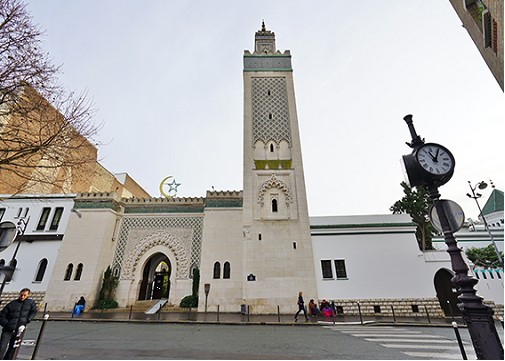
Grande Mosque, Paris
About a month ago I had to switch off the radio for a few days to reduce my daily intake of comments on the – to everyone’s relief – overruled Muslim travel ban across the pond. Meanwhile, on our side of the ocean, a young Turkish-French film director has been widely acclaimed for her debut, which is a brilliant addition to the impressively long list of highly successful migrant European films made by film directors who are originally from the same Muslim-majority country.
Motion pictures have the potential to transform cultural memory into a cathartic journey. Deniz Gamze Ergüven’s 2015 film Mustang keeps this promise. This dark parable on trauma and self-overcoming has won the César awards for Best Original Screenplay, Best Editing, Best Original Music, and Best First Feature Film. With its cinematic rewriting of classical tropes from the French fairytale Bluebeard in rural Turkey, the film raises the issues of women’s rights, faith, identity, family, and trauma on the screen.
Perhaps post-traumatic stress is an area of study whose liminality between neurological and cultural memory can play a part in fostering an aesthetic estrangement from othering ideologies – a critical re-engagement with a piece of the French/European self in its non-Christian neighbour. Everyday radical thinking and the social reinvestment in interfaith understanding give rise to multiple lieux de mémoire beyond established definitions of identity and belonging. This rebuilding of cultural memory is represented by neuroplasticity in political, literary, and filmic discussions of racism and sexism, in which learned fears and cultural traumas/nostalgias give way to a rewiring of perceptions and experiences. Such neuroscientists as Eric Kandel, Vilayanur Ramachandran, and Norman Doidge have found evidence of the key function played by the so-called neuroplastic rewiring of memory and learning for the brain’s activity. In such cases as the treatment of obsessive compulsive disorder, learned fears stored in the brain’s cingulate gyrus and reflected in the orbitofrontal cortex are unlearned by activating the gearshift supplied in the brain’s caudate nucleus. In this and other instances, new neuronal networks replace old ones thanks to the neuroplastic property of neurons and synapses processing information.
We’ll be looking at neurological and intertextual memory on 23 March, and (with the Cassal-Staunton Trust’s generous support) at French-Turkish-Muslim exchanges in Senate House on 11 March. From Muslims in French banlieue cultural memory and in medieval chronicles of the crusades to Barbe-bleue-like visions of trauma vs. belonging in the film Mustang, our discussion will span several centuries of French/European relations with Turkey and Islam. The film screening will crown the day.
Both events endeavour to question existing demarcations between disciplines, media, and cultures. I hope that numerous fellow questioners will take this chance to challenge intangible walls.
Dr Matthew Mild is a fellow in cultural memory studies at the Institute of Modern Languages Research, School of Advanced Study, University of London. Dr Mild previously lectured in Italian and European history in Northwest England and Wales. He has published in the field of contemporary history of fiction and performing arts from France, Italy, and Germany. His current research deals with migrant cultural memory in cinema and literature.
A conversation with Barbara Honigmann
Margaret May is studying for the Master of Research in Modern Languages at the IMLR. Here Margaret discusses a fascinating talk given by the writer Barbara Honigmann in February 2017:

Barbara Honigmann
© Peter-Andreas Hassiepen, Munich (2014)
On Thursday 23 February, in an event linked to the theme of an IMLR/OWRI conference entitled ‘Unsettling Communities: Minor, Minority and Small Literatures in Europe’, we were privileged to hear the writer Barbara Honigmann, currently writer-in-residence at the Centre for Ango-German Cultural Relations at QMUL, in conversation with Dr Robert Gillett, Reader in German and Comparative Cultural Studies at QMUL.
Famously, Barbara Honigmann does not like to be defined – as she often is – as a ‘German-Jewish’ writer, or as a ‘GDR writer’ or an ‘emigrant writer’ (though born in Berlin, she now lives in Strasbourg). She herself declared during the conversation that she preferred to be asked about her texts, rather than what for her were now ‘boring’ details about her life or status as a writer – tellingly, she felt this might clarify things for her too. Robert Gillett responded to this invitation through the format of the conversation, which developed in the main from readings in both English and German of excerpts from her recent book Chronik meiner Straße.
Her powerful sense of both displacement and familiarity, in both Berlin and Strasbourg, is striking in her writing as well as in the way in which she describes her everyday experience – as a confusing state where places transform themselves while essentially remaining the same. This sense of confusion, she admitted, might entail a fear of confronting the contradictions in herself over the complex subject of her Jewishness and her rootedness in German language and literature, as well as her life in France.
Some of these issues were explored in the initial discussion of her early essay on three female Jewish writers – Glückel von Hameln in the late seventeenth century, Rahel Varnhagen in the early nineteenth, and Anne Frank. All three were interestingly characterised as ‘not really writers’ who were ‘not really writing in German’, and in this context a reference was also made to the Dutch essayist and diarist Etty Hillesum.
Despite her biographical caveat, the author mentioned in passing fascinating details about her background (for example, her remarkable, elusive mother’s second husband was Kim Philby) and her own early life (such as the ambivalent relationship between the intellectual and cultural – and often Jewish – elite and the East German authorities). As she described it, it was relatively easy to lead a kind of parallel, Brechtian artistic life in the GDR, but the bubble burst with the forced exile of Wolf Biermann in 1976, and she was among those who decided to leave rather than make the necessary compromises in order to further their careers. We also touched on the influence of her theatrical background and her work as an artist in creating vivid, memorable images and focusing on the significance of everyday domestic objects, which sometimes take on a life of their own.
Chronik meiner Straße is a meditation on time passing, as revealed in series of anecdotes linked by the perspective of the writer seated, over a period of more than thirty years, at her desk in front of her balcony, perceptively observing her gradually changing, varied and mainly immigrant neighbourhood while also playing an active role in the lives of these neighbours, and reflecting the wider changes in society. This small-scale but incredibly vivid historical montage of unforgettable characters and scenes is the author’s response to the daunting ‘big history’ lived by her parents in the twentieth century. As she put it, the composition of the population in this area, so close to the German border, changed from ‘melting-pot’ to ‘salad bowl’, with the complementary flavours of different ethnicities, but it was a form of ‘de-territorialisation’ rather than homogenisation – not an easy situation for immigrants in France where assimilation is seen as a requirement for successful social integration. Yet her book suggests that the small cosmos of her street still manages to live in peace and the melting-pot had never been a reality.
Overall, the most powerful impression I gained from this rewarding event was of a thoughtful, gently humorous, compassionate observer of humanity. Barbara Honigmann’s deceptively simple, calm, conversational prose matches her public persona of warmth and sincerity to an extraordinary degree.
Margaret May, IMLR MRes student 2016/17
A citizen of the world in an interesting intellectual world
Clara Rachel Eybalin Casséus is a visiting fellow at the IMLR during the academic year 2016/17. She talks here about her experience at the IMLR
When I joined the Institute of Modern Languages Research (IMLR) as a visiting fellow in the fall of 2016, my intent was to find the right place to work on my manuscript with the provisional title ‘Geopolitics of Memory and Transnational Citizenship. Thinking Local Development in a Global South‘. I take memory as a powerful dynamic engine to deconstruct citizenship while connecting beyond borders. I am currently at the end of a chapter about diaspora politics and the particular involvement of Haitian-Americans in the past US election.
 For the past few months, I realised how well this interesting intellectual place fits my career project as an independent researcher eager to explore many facets of the institute and beyond. The Institute of Commonwealth Studies or the Centre for Post-Colonial Studies (CPS) or the Institute of Latin American Studies (ILAS), all carry activities that overlap my research interest: the interaction between mobility, citizenship and state politics. This is the case with the Centre for Integrated Caribbean Research (CICR) where I presented last December ‘The Geopolitics of Going South for the Caribbean: Moving Away from NGOs?’ This paper critically engaged with the geopolitical spaces of the Anglophone and Francophone Caribbean and questioned the pertinence of memory.
I quickly immersed in this dynamic and friendly academic environment, host of several centres of particular interest to me such as the Centre for the Study of Cultural Memory. I attended a one-day workshop titled ‘Reconfiguring Black Europe’ where I challenged the many categories too reductionist to grasp human complexity. I also participated for the first time in the two-day conference of the Society of Postcolonial Studies. It was a great opportunity to interact with scholars with whom I shared my positionality as an independent researcher originally from Haiti. It was a great opportunity to introduce my first monograph along with the re-editing of my late dad’s Geographical Dictionary of Haiti. At the School of Advanced Study, the Institute of Modern Languages Research offers a great site to make interesting contacts through the rich events it organises and sponsors. On March 31 2017, I’ll present a paper entitled ‘Circularity, Creolization and the Spatial Practices of Belonging’ where I aim to uncover how the interdependence of territories from both Commonwealth and Francophone Caribbean collide to meaningfully expand a creolized world.
After being awarded my PhD in Political Geography at the University of Poitiers (France) in 2013 and living for about four years in the Gulf, I was looking for a multicultural environment where I felt at ease with an interdisciplinary background which encompasses migration and environment studies, civil society and south-south cooperation. Today, I am quite enthused with the progress of my manuscript given the precious help I got in proofreading. IMLR is truly an ideal site of cutting-edge interdisciplinary research for a citizen of the world whose research interest spans from the Caribbean to the Gulf passing through Europe.
Clara Rachel Eybalin Casséus, IMLR Visiting Fellow, 2016/17
The next call for applications for both funded and non-funded Visiting Fellowships is now open! Full details of application procedures are available online. The deadline for applications is 31 March 2017, for the fellowship to be taken up between September 2017 and June 2018.
Thinking of a Visiting Fellowship at the IMLR? A personal perspective
Kate Willman is a Visiting Fellow at the IMLR during the academic year 2016/17. Here, she gives a personal insight into being awarded a Visiting Fellowship and the benefits gained, both to her research and to the IMLR.
After being awarded my PhD in Italian Studies at the University of Warwick about a year ago, I was looking for an academic home while I prepared my doctoral thesis for publication and embarked on a new research project, so the fellowship at the Institute of Modern Languages Research was the perfect fit. My forthcoming book based on my doctoral research addresses the recent literary phenomenon known as the New Italian Epic, a label used to describe a corpus of hybrid texts mainly published after the year 2000 in Italy, which merge genres, styles and media, and whose writers aim to effect change in society by depicting and re-assessing the past and present. My new comparative project draws on the New Italian Epic texts that employ what has been called autofiction, blurring the boundaries between the author’s real-life experiences and fictional elements, but I am now interested in looking beyond Italy to examine the explosion in popularity of this mode of life-writing in the 21st century, with a focus on work in Italian, French and English. My fellowship at the Institute is attached to the Centre for the Study of Contemporary Women’s Writing, as I’m particularly interested in how women have employed autofiction in recent years. Like many research projects, this interest sprang from a sense of annoyance, in this case after reading a blogpost on The Guardian website that asked ‘Is auto-fiction strictly a boy’s game?’, in which the author observed that, despite ‘a surge in popularity of late’, those authors who insert a character bearing their name into a work tend to be men. On the contrary, a huge number of women writers have employed autofiction in innovative and experimental ways to explore subjectivity and selfhood.
 I don’t think I realised just how useful the fellowship at the Institute would be, not only from the point of view of the shared office space and access to Senate House Library, but also in terms of having a range of experts on hand for friendly and practical advice and discussions about research. Being a fellow at the Institute means coming into contact with researchers from across the different institutes housed at the School of Advanced Study and from beyond, as well as having access to a wide variety of academic and public engagement events. The Institute is truly interdisciplinary, so it’s a great place to look beyond the confines of a national culture or to find out about a new discipline to incorporate into your research. Since starting here in September, I’ve not only attended a number of diverse events, but I’ve also made friends and contacts with whom I am already planning future collaborations.
Part of the fellowship is the opportunity to organise an event, but I’m actually organising two, as fellows can book a room and invite speakers on a subject that interests them. My event as part of my fellowship is a half-day workshop on Friday 10 March 2017 entitled ‘Women’s Self-Representation in the Digital Age’, when the other speakers and I will be looking at autofiction not only in terms of books, but also across platforms, from online videos to social media to images, exploring how the advent of the internet and the growth of celebrity culture has influenced representations of the self in the 21st century. On Tuesday 14 February 2017, I’m organising an event entitled ‘What Is A Modern Author? Evolutions in Authorship from the 19th Century to the Present’, when there will be five speakers offering snapshots from different points in the modern period that examine the impact of developments in the book market on how writers have portrayed themselves in their texts, negotiated their role as public figures and been perceived by the reading public. Preparing these workshops has given me more experience of organising events and brought me into contact with researchers working on comparable topics, as well as helping me to take a significant step forward with my new postdoctoral research project.
Kate Willman, IMLR Visiting Fellow, 2016/17
The next call for applications for Visiting Fellowships is now open! Full details of application procedures are available online. The deadline for applications is 31 March 2017, for the fellowship to be taken up between September 2017 and June 2018.
Teaching and Research in ‘Strategically Important’ Languages: a Comparative Perspective, between France and the United Kingdom
Christine Lorre-Johnston (Sorbonne Nouvelle-Paris 3), Catherine Davies (IMLR), and Charles Forsdick (AHRC) report on the recent seminar held in Paris discussing the notion of ‘strategically important’ languages.
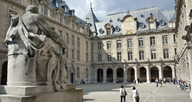 This one-day seminar was held at the University Sorbonne Nouvelle-Paris 3 on Friday 25 November 2016, in the amphitheatre of the Institut du Monde Anglophone. The seminar was conceived as a follow-up to a workshop entitled “What Is Modern Languages Research?” held by the Institute of Modern Languages Research, University of London, in July 2015. The Paris event was jointly organised by Christine Lorre-Johnston (Sorbonne Nouvelle, and LabEx TransferS programme), Catherine Davies (London, Institute of Modern Languages Research [IMLR]), and Charles Forsdick (Liverpool, and leadership fellow of the Translating Cultures theme of the Arts and Humanities Research Council [AHRC]), with the generous support of our respective institutions and research programmes.
The seminar took its cue from the fact that in England, Modern Languages, along with area studies and related languages, were considered “Strategically Important and Vulnerable Subjects” in the 2005 report of the Higher Education Funding Council for England (HEFCE). The aim of the day’s discussions was to investigate the notion of ‘strategically important’ languages, in a comparative perspective focusing on the UK and France, and the impact of that notion on higher education and research, as well as school education.
The introduction by Christine Lorre-Johnston recalled the existence of the parallel institutions that frame research and teaching in the UK and in France. The first panel, on European languages, was chaired by Janice Carruthers (Queen’s University Belfast) and Ricarda Schneider (Sorbonne Nouvelle). Andrew Hussey (University of London Institute in Paris) started with Juan Goytisolo’s novel Landscapes after the Battle (1982) to destabilise the notion of linguistic identity in France in the 21st century, with the omnipresence of Arabic. Catherine Davies discussed “The Growth of Spanish and Portuguese in the UK,” pointing out that because British universities are autonomous, government “encouragement” is not enough to sustain language degree programmes: dialogue with university management is important. Tatiana Matzenbacher (Sorbonne Nouvelle) stressed the diplomatic and political importance of learning Portuguese. Godela Weiss-Sussex (IMLR) described various initiatives that have been taken to emphasize German culture in an effort to counter the decline in the number of students of German.
The next two panels, chaired by Charles Forsdick and Stefan Sperl (School of Oriental and African Studies [SOAS]), dealt with non-European languages. Stefan Sperl explained how the SOAS Arabic Programme aims at transcending stereotypes for indigenous (English-speaking) students, and at gaining comparative perspective for heritage students (with an Arabic background). Luc Deheuvels (Institut National des Langues et Civilisations Orientales [INALCO]) retraced the long history of the teaching of Arabic in France, and pointed out that even though Arabic is taught in some 20 universities in France, there are still few Arabic teachers in secondary schools. Stephen Hutchings (Manchester), discussing Russian in the UK, evoked two current concerns: the notion of ‘securitisation’ of public discourse, and the need to explore the possibilities of research and teaching across language areas, because transnational and transcultural exchanges have spawned new geopolitical configurations. Nalini Balbir (Sorbonne Nouvelle) analysed the status of Hindi as a ‘rare’ or ‘small’ language in France, except in overseas departments with a population of Indian origin: in Guadeloupe, Hindi is taught at secondary level, and at the University of Réunion, a diploma in Hindi is available.
A whole panel, chaired by Charles Forsdick, was devoted to Chinese. For Derek Hird (Westminster), one challenge is to integrate Chinese language and another area of study, to offer a larger range of combined programmes. Li Wei (University College London) focused on the English Baccalaureate that was created in 2011, enabling high school students to join the “Mandarin Excellence Programme,” in the context of the ‘Golden Era’ between the UK and China. Joël Bellassen (INALCO) described the surprisingly long history of teaching Chinese in France, a language that ranked 5th in secondary schools in 2007, and has kept gaining ground since then. Because Chinese is so different from European languages, a better reference framework is still needed for it in the European Common Framework for languages.
The third panel, on “National Strategies,” was chaired by Janice Carruthers. Clíona Ní Ríordáin (Sorbonne Nouvelle) insisted on the need, in the case of the Irish language, to disentangle language from religion and politics and to acknowledge the presence of various traditions. Bernadette Holmes (Speak to the Future, UK) brought out the importance of a second language from employers’ viewpoint, and the value for young people of having cultural insight into another culture. Jocelyn Wyburd (Cambridge) explored the utilitarian aspect of the term strategic, including the importance of languages in the Army and the British Listening Services.
Catherine Davies chaired the fourth and last panel on “Strategic Usage of Languages.” Hilary Footitt (Reading) discussed the importance of languages in NGOs and the sense of temporality attached to it, of the need to learn a language now. Christopher Stone (Wolverhampton) noticed the same sense of immediate necessity with sign languages, often for economic reasons, notwithstanding the fact that sign language is a language of its own. Anna-Louise Milne (ULIP) evoked the variety of linguistic experiences that English students have when they spend three years in Paris, and how it changes their relation to the language. Charles Forsdick closed the seminar by stressing the need for a shift from ‘strategically important’ languages to the strategic importance of languages. He emphasised the intrinsic value of studying languages, as opposed to its utilitarian value, and the need to challenge the ‘linguistic muteness’ in research, policy and practice.
Christine Lorre-Johnston, Sorbonne Nouvelle-Paris 3
Catherine Davies, IMLR
Charles Forsdick, AHRC